Sports Radio Chatter

Twitter - Good and EvilLast night, I curled up in my leather chair with my iPad and an icy, cold beverage and participated in my first ever twitter chat.

And I liked it.

Every Wednesday night (10p ET/7p PT), sports radio hosts, producers, board ops, reporters, programmers and fans across the country are turning to twitter to chat about industry trends, new media, good guests, and share good practices, observations and tips.

Hmmm. Let’s sit with that for a second.

There’s a thought: use the power of twitter for good, not evil.

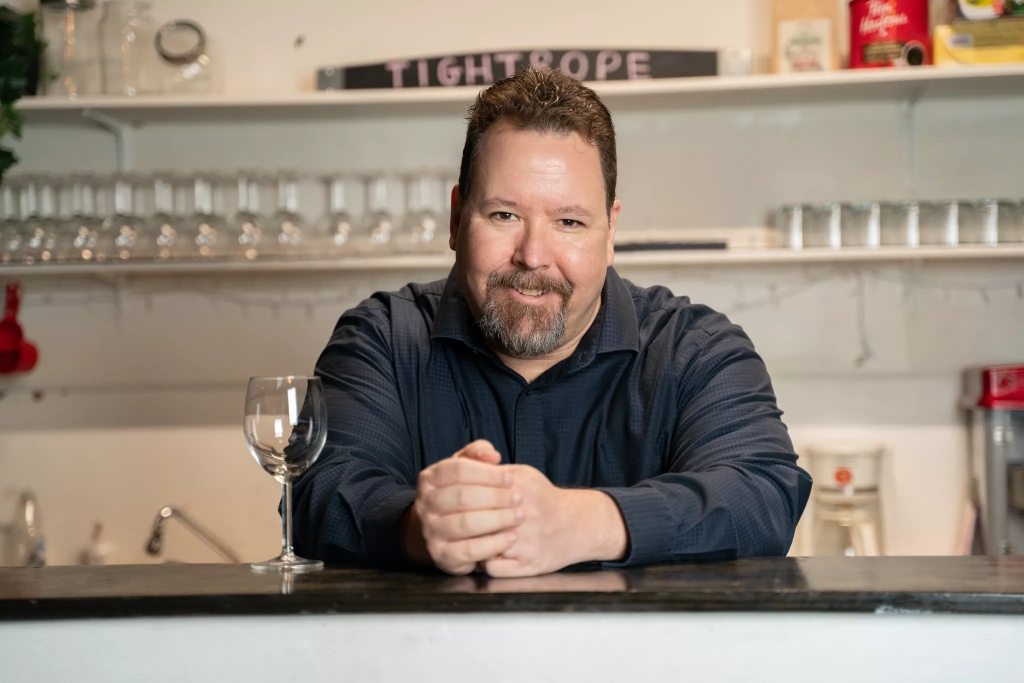
I think it is awesome that there is a weekly gathering of sports radio pros who help build each other up instead of tear each other down. And that is Chadd Scott’s intention behind the sports radio chats (#srchat), which started on May 8 with over 50 people participating.20130515104946_Chadd_for_web_ba

“I didn’t want it to be a bitch-fest. I didn’t want it be, ‘I wish I had more air time,’ or, ‘this show sucks,’ or, ‘this show should be national’, or ‘this guy doesn’t deserve a show.’ I wanted it to be positive, productive and respectful.” And it has been.

Scott, Assistant Program Director of 1010 XL in Jacksonville and former producer of The Herd with Colin Cowherd at ESPN Radio, told me on the Radio Stuff podcast, “I hope this connects sports radio professionals, brings them together, and serves as almost a fraternal organization or somewhere we can all go to meet each other and exchange ideas.”

owen-murphyScott hosts and moderates the weekly chats with KIRO Radio producer and “Steal This Idea” blogger Owen Murphy, who lives across the country in Seattle. They use the hash tag #SRCHAT, which you can access for past chats. One of the guys will throw out a question which is labeled “Q1” and anybody can chime in with a response by beginning “A1.”

It’s easy. Here’s a snippet of what went down last night.

Chadd Scott‏@ChaddScott15h Q1: How important is FM distribution to ratings success in sports radio? #srchat

Owen Murphy‏@TalkRadioOwen15h A1: FM distribution is huge, but AM shd not be dismissed. FM has much larger potential audience, but AM can win when combined w pxp #srchat  

Amanda Gifford‏@AmandaLGifford15h A1. Certainly doesnt hurt, but people find good content no matter where it is. Ask Rush Limbaugh. #srchat

Chadd Scott‏@ChaddScott15h A1: FM distribution is CRITICAL to ratings success in sports radio, especially for new stations, especially w/ younger demos #srchat  

Ingram Smith‏@IngramSmith15h @ChaddScott A1: content will always win – but the strength of FM signal, in particular when the sun goes down can not be understated #srchat

Owen Murphy‏@TalkRadioOwen15h A1: There are some markets where nearl 80% of the audience ignores AM. This makes MLB pxp a game-changer if you have AM stick. #srchat

The Gentleman Masher‏@GentlemanMashr15h @ChaddScott depends on the market. Good content will trump & streaming will eventually make it irrelevant. #srchat

Owen Murphy‏@TalkRadioOwen15h Hey @AmandaLGifford A1: A station needs marketing budget and q-rated hosts to win quickly on AM, as many listeners never visit #srchat  

Heath Cline‏@heathradio15h @ChaddScott FM’s huge. Competitor loves to tout their AM signal’s strength. Only people hearing it are 50 – we crush them on 40k FM. #srchat

Larry Gifford‏@Giffordtweet15h #srchat a1 fm distribution is where 80%+ of the audience is but AM listeners listen 4ever. WFAN will feel pinch when CBS takes AM 660

Sports MBA‏@SportsMBA15h As a consumer, Im one of those. RT @TalkRadioOwen: A1:markets where nearl 80% of the audience ignores AM. #srchat

Larry Gifford‏@Giffordtweet15h #srchat a1 content is king, but when majority of audience doesn’t visit AM you’re only the tallest dwarf.  

Owen Murphy‏@TalkRadioOwen15h A1: As w anything, it’s all about execution, budget and having great pxp partnerships, while poorly planned FM can stagnate. #srchat

Colleen Wall‏@ColleenWall14h A1: Since quality can be better on FM, that’s attractive to listeners. I tune to ESPN NY more often now that its switched to FM #srchat

Wells Guthrie‏@WellsESPN105114h A1: In small-mid size markets FM signal is vital. In large markets AM signals are more than enough. #srchat

You can read the entire #srchat transcript here. It’s exciting to me that smart people in radio are joining forces for the power of lifting the industry instead of tearing each other apart. It’s a trend I’m seeing more and more of and liking (see: Hivio. ) And the great thing is that anybody can set up a hashtag and a chat whenever you want. Do it. Invite your peers. Share ideas. Learn from each other. Lift each other up.

(AUDIO) Radio Stuff Podcast – Episode 1

Radio Stuff Podcast LogoListen to the inaugural “Radio Stuff” podcast with Deb Slater (@deb_slater and www.debslater.com) and me. This first podcast we listen to how different radio sources treated the Cleveland story about the three women found after years in captivity; WTAM, Fox News Radio, NPR, Rush Limbuagh, BBC, and Radio Australia. We also talk about Paula White who got drunk before her final Friday night shift at BBC Radio Stoke. We listen to News Talk 980 CJME (Regina, Canada) and host John Himpe’s thoughts on a would-be seriel killer allowed to watch Dexter. We listen to radio station imaging from 100.3 The Sound in LA and 99.3 The Vine in Wine Country. We talked to XL 1010 Jacksonville’s Chad Scott about a new sports radio chat on twitter #srchat, and we debate the decency of a Fresh N Easy commercial. There’s a lot here! Enjoy. Let us know what you like, what you want more of, and what you could do without. And please send contributions, tips, audio, insights to both of us at radiostuffpodcast@gmail.com


Radio Stuff Podcast – Episode 1

Hey, YOU are really talented!

Encouraging-WordsIt’s free. It’s fast. It’s effective in motivating your team and getting the results you want. But hardly anyone in radio is doing it.

When was the last time you paid someone a genuine, specific compliment about something they did?

It’s a rare treat in radio to be certain. I know for me, I usually hear about the good things and positive impact I make during my final week on the job. It’s flattering for sure and a little depressing that it takes my resignation to trigger genuine compliments – and often times I’m so surprised I blush.

“Wow, I did that? Cool.”

The other day, I was talking to someone who wasn’t sure if a trusted and dear friend enjoyed her work, because she’d never said so. She didn’t NEED the validation, but she really WANTED it. She wants people to enjoy her work and hoped they ‘get it’ and appreciate it.

So it got me thinking. Why don’t we offer compliments to each other more often?3221c47caa4bd4a26d1d6548ab8b2b0f

I imagine we believe we’re too busy to notice good things. We are so focused on improving the product by highlighting what’s wrong that we don’t have the time to showcase and reinforce what’s right. Accentuating the negative is an ongoing issue in our industry that I blame Arbitron for (why not?). Because of fluctuating ratings, we believe something is always broken, wrong, needs fixing or changed. We (radio programmers, general managers, consultants, etc.) focus a lot of time and effort on insanely attempting to master almighty Arbitron and less on cultivating the great work from each other through our compliments.

There are other reasons we skip the niceties too. Some of us are too insecure of our own talents, too afraid to shine a light away from ourselves, or too intimidated by others to speak up. What else? You know that feeling when you want to say something, but you’re not sure what to say and you don’t want to sound stupid? That feeling often keeps us from saying anything at all. There are also factions of folks in radio who don’t believe it’s their job to compliment others (but no doubt they’ll talk negative behind your back). And then there are those who assume people hear how good they are all the time from other people, so why bother.

I’m sure I’ve been guilty of all of these at one time or another.

Here’s a secret. No one hears how good they are or receives compliments on the exceptional things they do – often enough. Whether you are talent, management, sales, production, news, board op, promotions, engineering or the front desk assistant, you want compliments and people want to receive compliments from you.

And it’s scientifically proven to make people better at their job. A research study published in November by a team of Japanese scientists in the Public Library of Science’s scientific journal PLOS ONE found proof that a person performs better when they receive a social reward (a compliment). The team previously discovered that the area of the brain known as the striatum is activated equally when a person is rewarded via a compliment or cash.

maslow

Compliments inspire, empower and make people feel awesome. People want and need to feel appreciated for what they do – even the guys with big egos and the women with rock-n-roll attitudes. People need to feel respected, feel valued and have good self-esteem. This is the fourth level of Maslow’s Hierarchy of Needs. Maslow even said when people do not have self-respect they feel incompetent and weak. Raise your hand if you want employees and co-workers who feel incompetent and weak!

Plus, there’s the side benefit of positive reinforcement. Your one minute of telling someone how much you “loved” this or how “great” that was has the power to motivate that person to repeat that behavior and continue to be great over and over again.

And just as powerful is our silence. Not providing appreciation and recognition for great work is de-motivating and demoralizing. It’s a hallway buzz kill that makes everyone feel “less than.” Nothing like a radio station full of passionless drones who feel unappreciated, undervalued and overworked. But that would never happen in radio, right?

So how do you do it? David Stewart, an eHow.com contributor, has an easy step-by-step process on complimenting someone at work.

1. Find something specific and genuine that you like about your colleague.
2. Choose the right words that help express your appreciation.
3. Begin a compliment with “you.”
4. Provide a specific example of what you noticed, observed.
5. Notice and recognize small things that matter. Don’t wait for major events to show appreciation.

For example; “You have a real knack for self-improvement and positivity. I noticed you reading the Larry Gifford Media blog today and it just reminded me how much I admire the amount of time and effort you take to better yourself. Thanks for setting a good example for everyone else.”

(Paying a compliment is one of 13 ways you can be a better co-worker according to Reader’s Digest.)

Now, go forth and compliment. Let others know you appreciate them. No strings attached. No expectations. Just be kind, be genuine and be generous with your praise. It’s good for team morale, personal self-esteem and productivity. Oh, and did I mention it’s free (and not just to the 12th caller).

Radio’s Dashboard Revolution

I’ve recently found myself in a position to take a step back, look at what’s happening in the radio industry and… think. Thinking is not a luxury I’ve had for a while. When you are caught up in the day-to-day operations of radio, you end up reacting, meeting, planning, meeting and meeting all the time, but spend little time just thinking. My latest thoughts have to do with the new car infotainment systems and how radio can capitalize on them.

TALK ABOUT  A REVOLUTION

The North American colonies battled Britain for independence. The French middle-class revolted against Bourbon King Charles X for bankrupting the country and still living a lavish lifestyle, and radio is battling (technology, automakers, the internet, each other, good ol’ days…) over position in the new world of in-car entertainment.

Revolution

Welcome to radio’s dashboard revolution.

When the infotainment systems, like Cadillac’s CUE, were unveiled a couple years ago, I believe we all let out a collective gasp. But, admittedly, I assumed the reality of losing our comfortable front row seat on the dash was downstream a bit and nothing we’d have to wrestle with too soon. I was mistaken.

Here’s the Cadillac Cue.

Last month, Cadillac upgraded the CUE to add more features, more internet connectivity, more iPhone capability, and more stuff that distracts people from the business of listening to the radio. BMW announced this week at the New York International Auto Show that it’s added Rhapsody, TuneIn, Audible, and Glympse to Pandora and MOG in its in-car entertainment system.

And now these kinds of systems are available in cars that cost less than $30,000.

Check themylinkse out.

Chevy Mylink 
MyFord Sync 
Hyundai Blue Link 
Chrysler’s U Connect 
KIA UVO Entertainment 
Toyota’s EnTune

All these systems include some of the following; SiriusXM satellite Radio, WiFi, Pandora, Stitcher, Bluetooth connectivity, CD Player, SD card slot, a USB port, an auxiliary jack for audio or video input, and/or an in-car interface for iPhone users.

Unfortunately, none tout the AM/FM receiver (though Chevy MyLink is now showing AM and FM buttons next to the others).

So, this brings me to some thoughts about how radio stations can seize this as an opportunity.

1. Own more than one button on the dash. Radio folk are all a tizzy wondering how they can get their station on the dash. I believe the question is how does your brand own more than one button on the dash? Let’s take radio station KFI in Los Angeles as an example. The programming and IT teams should be talking about how to set up 24-hour simultaneous streams for KFI Live, KFI News, KFI Traffic, KFI Bill Handel, KFI John & Ken, KFI Weekends, etc. It’s the ESPN model. Create brand extensions so that on the dash, I can sync up KFI News, KFI traffic, and KFI Live on 3 of my 6 to 8 buttons. Stations can then monetize each stream seperately.

2. Teach, Lead, Guide and Produce Content for other brands. I believe every brand is going to want a button in the dash; McDonalds, Nike, USAToday, American Red Cross, etc. It’s a great brand extension and a new way for consumers/fans to experience non-media brands on a “radio” without it being a commercial. As the experts of “ear-entertainment” we should be offering our studios and services to these brands to create streaming audio content that cuts through. We have the equipment, talent, creativity, and a desperate need for a new revenue stream. They have celebrity endorsers, experts in the field, storytellers, fans, the desire and money. It’s a no-brainer.

Bonus: In addition to charging for the studios and services and helping to create compelling content. These brands now have quality creative content that could be customized into short form snippets for 2- or 3-minute sponsor blocks on your radio station as “enhanced commercials.” It’s quality content (you created it) and it’s reflective of the sponsors brand with product placement and tags throughout. This allows you to continue building both tradition and non-traditional revenue streams.

3. Be THAT good. Yeah, radio has had it easy. No matter how much effort or money was invested (or not) into the product, it was always available at every driver’s fingertips. The game is changing. Now you need to create radio that people want to hear, because their options are limitless. Why are they going to pick you? Believe in your product, invest in people, and make your product available however your fans want it. If you’re that good, you’ll find your way onto the dash.

It likely won’t take a miracle to survive the dashboard revolution, just some creative problem solving and opportunity seizing.

How Do You Get Better? Improv(e).

Me: Hi my name is Larry.theater geek

Everyone: Hi Larry!

I am a recovering high school drama geek. I was in the plays and musicals, auditioned for and was accepted into a collegiate theater program, I wore a dance belt and tights (a few times), I took piano lessons, learned how to breath “properly,” explored the history of theater and more. (Lucky for me, the radio station was housed in the basement of the theater – thus, avoiding a career as a New York City waiter.) Of all my theater experiences, the one that comes in handy in every job I have is improv.

On the air or off – improv skills have served me well. Let me just say upfront, if you are a producer, a host, an anchor, a reporter, or a programmer – invest in some improv classes for yourself – it will make you better at your job. It teaches you how to be in present in the moment and hones your ability to listen, react, adapt, create, innovate, play, contribute, and actively engage with the people you work with. Who doesn’t want that?

TinaFeyBossyPantsI was reminded of this while watching Tina Fey discuss the rules of improv while on Inside The Actors Studio this week. (A show that I unabashedly enjoy and one that I’ve paid homage to in my Inside The Bonneville Studios interviews – here with Luke Burbank, Linda Thomas, Brock & Salk and Dori Monson). Tina Fey honed her skills at Second City in Chicago before going to Saturday Night Live. In her book, “Bossypants,” she wrote down the rules of improv that she’s adapted as a world view and she claims they’ve changed her life.

“The Rules of Improvisation that will change your life and Reduce Belly Fat” (p84-85)


  1. AGREE – always agree & SAY YES. When you’re improvising, this means you are required to agree with whatever your partner has created. So if we’re improvising and I say, “Freeze, I have a gun” and you say, “That’s not a gun, it’s your finger” our improvised scene has ground to a halt. But if you instead say “The gun I gave you for Christmas! You bastard!” then we have started a scene because we have AGREED that my finger is a Christmas gun. In real life you’re not always going to agree with everything everyone says. but the Rule of Agreement reminds you to “respect what your partner has created” and to at least start from an open minded place. Start with YES and see where that takes you.
  2. Not only say yes, but say YES, AND. You are supposed to agree and then add something of your own. If I start a scene with “I can’t believe it’s so hot in here” and you say “Yeah…” we are at a stand-still, but if you say “Yes, this can’t be good for the wax figures” now we’re getting somewhere. YES, AND means don’t be afraid to contribute. It’s your responsibility to contribute. Always make sure you’re adding something to the discussion. Your initiations are worthwhile.
  3. MAKE STATEMENTS – Don’t ask questions all the time. If I ask continuous questions I am putting pressure on you to come up with all the answers. Whatever the problem, be part of the solution. Don’t just sit around raising questions and pointing out obstacles. Speak in statements instead of apologetic questions. Make statements with your actions and your voice. For instance, instead of saying “Where are we?”, make a statement like “Here we are in Spain”.
  4. THERE ARE NO MISTAKES, only opportunities. If I start a scene as what I think is very clearly a cop riding a bike, but you think I’m a hamster in a wheel, then now I’m a hamster in a wheel. I’m not going to stop everything to explain that it was really supposed to be a bike. In improv there are no mistakes, only beautiful happy accidents. And many of the world’s greatest discovered have been by accident. For instance, Reese’s PB Cup & Botox.

So, how many times do you or your on-air partners disagree with, disregard or discredit something the other said so you can one-up them, make a better point, or deliver a pithier punch line? Or you’re not sure what to say about a topic or how to move it forward, so you continually just ask questions of your co-host or the audience? Or a sound-byte doesn’t fire and you feel a need to explain to listeners it was supposed to be there – maybe even through your board op or producer under the bus – when in reality the audience had no clue it was coming? All of these are violations of improv.

Other improvisionalists have other rules. For instance, at TEDxVictoria, David Morris offered seven rules.  (10 minute Ted Talk here)

  1. r_davemorrisPlay. The idea of engaging in something just because you like it.
  2. Let Yourself Fail. LET is the key. Failing is easy. The hard part is being okay with it. As soon as you start fearing failure you get trapped in your head. Failing does not make you a failure. Just fail, improvise and start again.
  3. Listen. Listen with all your being. Most people listen just enough to be able to respond. True listening is the willingness to change. If you are not willing to change based on what someone is saying, you are not listening. You are just letting them talk, before you respond.
  4. Say YES. A series of YES’s will take us somewhere. A single NO shuts down the entire journey.
  5. Say AND. YES-men are great. AND-men are people we want to work with. They say, “Yes, I like your idea!” AND they add to the creation.
  6. Play the Game. Anything that has rules is a game whether that’s playing Monopoly or filling out a job application. Rules free us up to improvise. Restrictions funnel our creative process to a create a product.
  7. Relax and have fun. It will lead to a more enjoyable life.

Improv isn’t about comedy. As David Morris’ pointed out in his Ted talk, MacGyver is one of the great improvisers of our time and he dealt in explosives. Whether you’re trying to save the World, save your ratings or save a segment; learn to improvise.

For Different Results – Change

imagesCA3UGTE2

  CAUTION: For more predictable results, keep doing what you’re doing.


Too often, I hear employees (hosts, producers, board ops, etc) want more, expect more, and demand more, but are unwilling to change to get it. There’s an overwhelming sense of entitlement in our business from the newcomers to the veterans.

-       I want more money, but I don’t want more work.

-       I want to be on-air, but I won’t work weekends or holidays.

-       I want full-time, but I can’t work Wednesdays.

-       I want better ratings, but my show is perfect the way it is.

-       I want a job, but I’m a veteran of the business so I won’t apply or audition.

Change starts with you.

I know a sales manager who has been in his same office for 13 years and needs more and better results. So he changed. He packed up his office and moved one office over to the left. Now he has a different perspective, a little different view out his window, and his sellers have to change too – or they’ll end up in the wrong office. He has a pep in his step, sales are trending up and now others are wondering if they can change offices too. As you change, the world will change around you.

On February 8, 2013 I made an announcement to my employees that left many of them and others I know scratching their heads. I announced my resignation. I said, “I am a believer in the brands, philosophies, purpose, and the people who breathe life and personality into our products.  I believe we are positioned for success.  I also recognize we have evolved greatly in the two years I’ve been here.

As organizations evolve, their leaders need to evolve as well.   As I’ve considered where we are and the road ahead, it has become clear to me that the type of leadership needeChanged to keep moving forward requires someone with different strengths and passions than mine.  So, with mixed emotions, I have resigned my position.”

“Why would you do that?” the collective “they” asked.

I wanted change.

This Friday is my last day. I took action, but my change is just getting started. I’m going to create new routines, patterns, and behaviors to change the opportunities and experiences in my life. The family is going on a month-long RV trip, I’m going to start taking better care of me – physically, mentally, spiritually, I’m going to take on more household responsibilities, I’m going to write more, spend more time in nature and I’ll probably be a more active networker.

All these changes in my life will lead to more change in my life, new perspectives, and new opportunities. Change isn’t easy, it doesn’t reward those who wait around, but rewards those who trust.  I have no idea what’s next for me, but I’m confident exciting, new opportunities are around the corner.

The Truth Can Hurt, Which is Why So Many People Avoid It

I set out to write a blog post about the things that annoy me about hosts / talent / personalities who apply for jobs. I’ve been going through mounds of mp3, CDs, even a stray tape or two. Listening through just a few minutes of each demo can be a struggle. But, then I realized – someone is telling these guys/gals they have talent. One of three things is certainly happening.

  1. These “talent” are being lied to about their talent by people who mean well.
  2. They’re getting bad advice from PDs or fellow talent.
  3. They’ve stopped listening to the people in their life that know better.

Leaders: I implore you to stop lying to people about the size of their talent and stop dishing out decade old, stale advice.

Hosts: If you only hear what you want to hear consider yourself at the top of your success. You’re never as good as “they” say you are and never as bad as your harshest critic. But, you must always strive to be better.

In an effort to be helpful, here are four things you can start doing today to be better a host.

Know What Big Story Your Show Is About Each Day.This is my “pick a lane” advice. Be about something each day. If even it’s a slow news day, it is better to be about something than trying to be about everything. What’s the thread holding your show together? It is not picking one story to talk about for three hours; it is picking one story that you want your listeners to remember you for that day and giving it more and better treatment than everything else.

Immerse Yourself in Details of the Stories You Want to Talk About. When you “play the hits” of the day, whatever they may be. Do your homework. Read up on it. Read everything you can. The more you read the better chance you have of finding a unique angle and creating a more memorable, substantive conversation.

Edit Your Own Audio. How can you tell the story, the way you want to tell it, if someone else is deciding what the key characters are going to say? Editing audio is not beneath you. Why leave the heart and soul of your show up to a $10 an hour board op. In my experience not only does editing your own audio give you certainty on a topic, it makes your treatment memorable and remarkable.

Do Not Let Segments Dictate The Length of a Story. Drives me crazy when hosts look at the clock and see they have seven minutes and look to see what topic they can stretch to fill the time. You should take the necessary time you need to tell a story and make your point and then move on to the next story or angle. It takes discipline and preparation. Don’t do your listeners any favors by “filling” the last two minutes with idle chit-chat on the topic. Give me a quick hit of something else, that’s great. Respect my time.

These four concepts are a good starting point. If it resonates with you, try it. Let me know how it goes.

Follow

Get every new post delivered to your Inbox.